
The World Speaks Spanish. Maybe Our Children Should, Too…
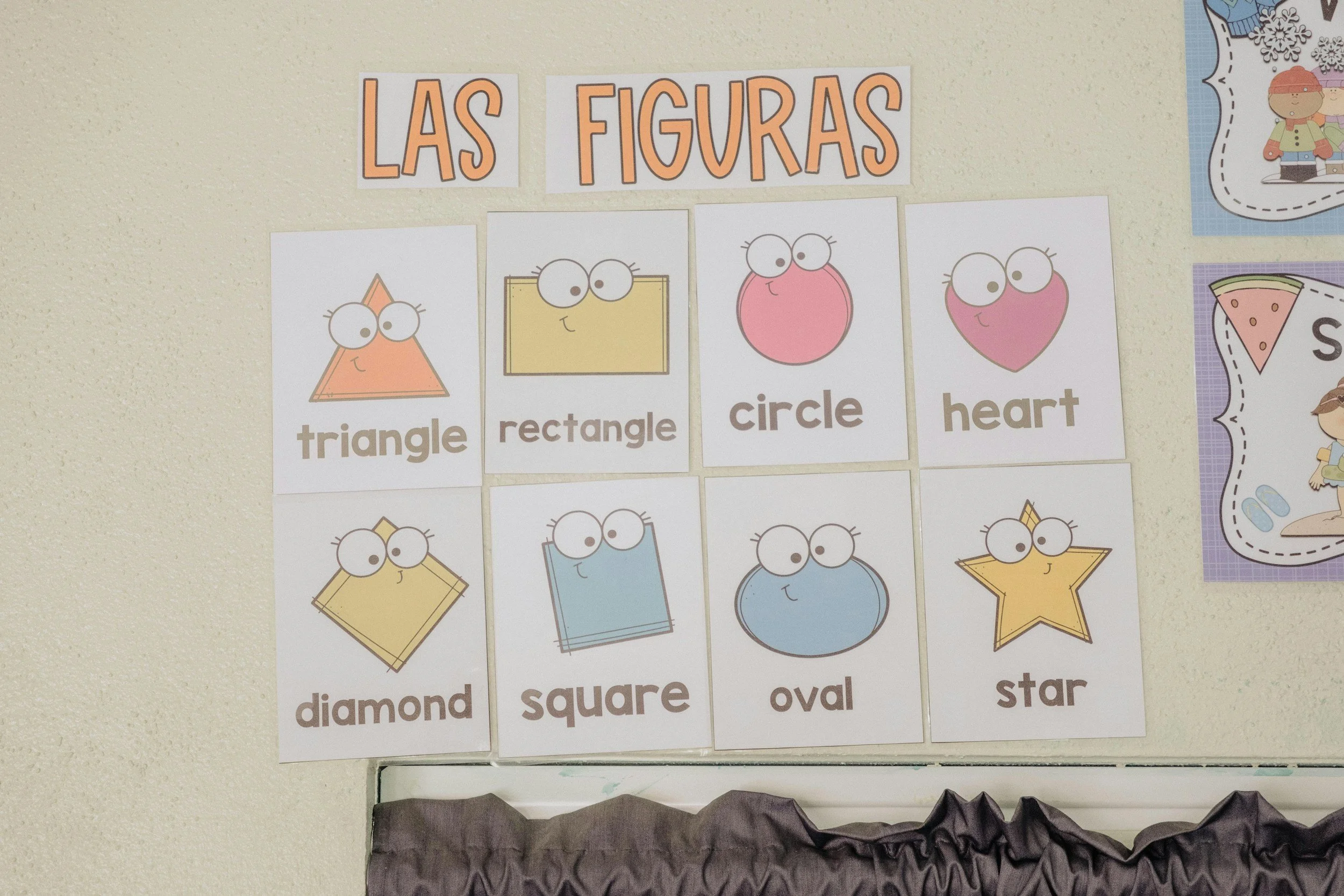
Spanish is everywhere. It fills the air in the colorful mercados of Mexico City, echoes through the cobblestone streets of Madrid, and rings out in the vibrant neighborhoods of Miami, Los Angeles, and Chicago. With more than 500 million native speakers and another 75 million who speak it as a second language, Spanish is one of the most widely spoken languages on the planet. Its influence is only growing. For parents and educators thinking about the languages children should learn, the case for Spanish is compelling. And it seems the earlier the start, the better.
A Language Without Borders
Spanish is the official language of 21 countries. From Spain in Europe to Mexico, Colombia, Argentina, and Peru in the Americas, the language stretches across an enormous swath of the globe. It is the dominant language of Latin America — a region of more than 650 million people — and it is the second most spoken language in the United States, with roughly 42 million native speakers and another 12 million bilingual speakers calling the country home.
That number is growing rapidly. The U.S. Hispanic population is projected to reach 111 million by 2060, meaning that Spanish will continue to shape American culture, commerce, and community life for generations to come. In many American cities, Spanish is already not a “foreign” language at all — it is the language of neighbors, colleagues, local businesses, and community institutions.
Beyond the Americas and Spain, Spanish-speaking communities thrive across Europe, the Philippines, Equatorial Guinea, and throughout diaspora communities worldwide. Spanish is one of the six official languages of the United Nations and is among the most studied languages globally, second only to English in total number of learners.
Simply put, Spanish is not just a useful language. It is a world language — one that opens doors on nearly every continent.
The Science of Early Language Learning
Children are remarkable language learners. From birth, the human brain is wired to absorb language at an astonishing rate, and this capacity is never stronger than during the first decade of life. Linguists and neuroscientists refer to the period from birth through about age 12 as the “critical period” for language acquisition — a window of time when the brain is especially receptive to new sounds, patterns, and structures.
During these early years, children learn language the way they learn everything else: naturally, playfully, and without fear. Unlike adults, who must consciously study grammar rules and vocabulary, young children absorb language through exposure, repetition, songs, stories, and conversation. They don’t overthink it. They just speak.
When children begin learning Spanish in the preschool or early elementary years, they develop what researchers call “native-like” fluency — pronunciation, rhythm, and intuitive grammar that adults who begin studying a language later in life rarely achieve. The earlier a child is introduced to Spanish, the more naturally the language takes root.
Cognitive Benefits That Go Beyond Language
Teaching children Spanish is not just about communication. Research consistently shows that bilingual children develop a range of cognitive advantages that serve them throughout their lives.
Bilingual children tend to demonstrate stronger executive function — the set of mental skills that includes attention, working memory, and flexible thinking. Because their brains are constantly managing two language systems, they become skilled at filtering out distractions and switching between tasks. Studies have found that bilingual children often outperform their monolingual peers on tasks requiring problem-solving and creative thinking.
Language learning also strengthens literacy skills in a child’s first language. Children who study Spanish develop a stronger awareness of how language works — its sounds, structures, and patterns. This metalinguistic awareness helps them become better readers and writers in English as well. For young learners still building foundational literacy skills, the benefits compound beautifully.
There is also growing evidence that bilingualism supports long-term brain health. Research suggests that people who speak two or more languages may develop symptoms of dementia later in life than monolingual individuals — a compelling reminder that language learning is a lifelong investment in cognitive well-being.
Cultural Connection and Empathy
Language is more than a communication tool. It is a window into a culture, a history, and a way of seeing the world. When children learn Spanish, they gain access to one of the richest and most diverse cultural traditions on earth — the art, literature, music, folklore, and history of more than 20 nations and countless communities.
Learning Spanish invites children to explore the poetry of Pablo Neruda, the magical realism of Gabriel García Márquez, the rhythms of salsa and cumbia, and the vibrant visual traditions of artists like Diego Rivera and Frida Kahlo. It connects them to the stories of indigenous peoples whose languages and traditions are woven through Latin American Spanish. And it helps them build genuine empathy and understanding for communities whose experiences may differ from their own.
In an increasingly diverse society, children who can communicate across language lines are better equipped to build meaningful relationships, to understand different perspectives, and to participate fully in their communities. Spanish, in particular, provides a bridge to a large and growing segment of the American population — a bridge that can make an enormous difference in a child’s personal and professional life.
Practical Advantages That Last a Lifetime
The practical benefits of Spanish fluency are significant and well documented. Bilingual employees earn higher wages than their monolingual counterparts. Professions in education, healthcare, social work, law, business, and government actively seek out Spanish speakers. Companies with international reach — particularly those doing business in Latin America or serving Spanish-speaking communities in the U.S. — place enormous value on employees who can communicate across languages without barriers.
Children who learn Spanish early are not just building a skill. They are building a competitive advantage that will distinguish them throughout their academic and professional journeys.
Start Early. Start Now?
The gift of language is one of the most powerful things we can give a child. Spanish, with its global reach, cognitive benefits, cultural richness, and practical value, is an especially meaningful language to offer. And the research is clear: earlier is better. Whether through immersion programs, dual-language classrooms, bilingual books, songs, or everyday conversation, every opportunity to introduce Spanish to a young child is an opportunity well spent.
Frequently Asked Questions
Q: How many people speak Spanish in the world?
A: As of 2025, approximately 636 million people speak Spanish worldwide, including 520 million native speakers, making it the second most spoken native language on Earth after Mandarin Chinese.
Q: What is the best age to teach a child Spanish?
A: Research suggests the earlier the better — ideally before age 10–12, when the brain’s “critical period” for language acquisition is still open. Children exposed to Spanish in preschool or early elementary school develop near-native fluency most readily.
Q: What are the cognitive benefits of children learning Spanish?
A: Bilingual children demonstrate stronger executive function, better working memory, improved attention, and greater metalinguistic awareness. Studies also show bilingualism may delay the onset of Alzheimer’s symptoms by 4–5 years later in life.
Q: Does learning Spanish help children in school?
A: Yes. Children who learn a second language like Spanish develop stronger literacy skills in their first language as well, because language learning builds phonemic awareness, vocabulary, and overall understanding of how language works.
Q: Will speaking Spanish help my child earn more money as an adult?
A: Research shows bilingual workers earn between 9–19% more than their monolingual peers on average, and Spanish is the most in-demand second language in U.S. job postings — appearing in 86% of all bilingual job listings.
Sources
1. CVC. Anuario del Instituto Cervantes 2024. Índice. (2024) Cervantes.es. Available at: https://cvc.cervantes.es/lengua/anuario/anuario_24 (Accessed: 27 February 2026).
2. Wikipedia Contributors. 2019. “Spanish Language.” Wikipedia. Wikimedia Foundation. August 28, 2019. https://en.wikipedia.org/wiki/Spanish_language.
3. Wood, G. (2023) How many people speak Spanish? A full breakdown by country, Rosetta Stone. Available at: https://blog.rosettastone.com/how-many-people-speak-spanish-a-full-breakdown-by-country/.
4. Spanish, a Growing Global Language | ICH (no date) cervantesobservatorio.fas.harvard.edu. Available at: https://cervantesobservatorio.fas.harvard.edu/en/about/spanish-in-united-states.
5. Hartshorne, J.K., Tenenbaum, J.B. and Pinker, S. (2018) ‘A critical period for second language acquisition: Evidence from 2/3 million English speakers’, Cognition, 177(1), pp. 263–277. Available at: https://doi.org/10.1016/j.cognition.2018.04.007.
6. Kuhl, P.K. (2011) ‘Early Language Learning and Literacy: Neuroscience Implications for Education’, Mind, Brain, and Education, 5(3), pp. 128–142. Available at: https://doi.org/10.1111/j.1751-228x.2011.01121.x.
7. ABUTALEBI, J. and CLAHSEN, H. (2018) ‘Critical Periods for Language acquisition: New Insights with Particular Reference to Bilingualism Research’, Bilingualism: Language and Cognition, 21(5), pp. 883–885. Available at: https://doi.org/10.1017/s1366728918001025.
8. THE IMPACT OF EARLY CHILDHOOD BILINGUALISM ON COGNITIVE DEVELOPMENT NAME OF AUTHOR: MAYUSHI CHANDA OSCAR DESIGNATION: LINGUISTICS NAME OF DEPARTMENT: LANGUAGES NAME OF ORGANIZATION: DMI-ST EUGENE UNIVERSITY (no date). Available at: https://www.ijnrd.org/papers/IJNRD2506034.pdf.
9. Barac, R. et al. (2014) ‘The cognitive development of young dual language learners: A critical review’, Early Childhood Research Quarterly, 29(4), pp. 699–714. Available at: https://doi.org/10.1016/j.ecresq.2014.02.003.
10. Craik, F.I.M., Bialystok, E. and Freedman, M. (2010) ‘Delaying the onset of Alzheimer disease: Bilingualism as a form of cognitive reserve’, Neurology, 75(19), pp. 1726–1729. Available at: https://doi.org/10.1212/wnl.0b013e3181fc2a1c.
11. Alladi, S. et al. (2013) ‘Bilingualism Delays Age at Onset of dementia, Independent of Education and Immigration Status’, Neurology, 81(22), pp. 1938–1944. Available at: https://doi.org/10.1212/01.wnl.0000436620.33155.a4.
12. Fiore, M. (2020) Bilingualism Delays the Onset of Alzheimer’s Symptoms, www.uclahealth.org. Available at: https://www.uclahealth.org/departments/neurology/about-us/neurology-lab-profiles/bilingualism-delays-onset-alzheimers-symptoms.
13. Grundy, J. (2021) Study shows learning a second language thwarts onset of dementia, news.las.iastate.edu. Available at: https://news.las.iastate.edu/2021/01/28/study-shows-learning-a-second-language-thwarts-onset-of-dementia/.
14. Bilingual Salary Calculator: How Language Skills Boost Pay (2025) Language learning with Preply Blog. Available at: https://preply.com/en/blog/bilingual-salary-boost/.
15. Callahan, C. (2022) Differential pay: What should bilingual workers expect from employers?, WorkLife. Available at: https://www.worklife.news/talent/bilingual-pay/.